Abstract
Paintings
Structure and spontaneity may seem like opposites, but both play an essential role in Ronald Bertrand’s abstract paintings.
With a professional background in architecture, Ronald approaches abstraction through an understanding of form, space, proportion, and geometry. Then he allows the process to move beyond rules and practical limitations.
The result is an exploration of what happens when architectural thinking meets artistic freedom.
Beyond the Rules of Architecture
Architecture requires a relationship between imagination and function. A building must respond to physical conditions, materials, construction methods, and the people who will use it.
Abstract painting offers Ronald the opportunity to explore visual relationships without those requirements.
A line does not have to define a wall. A shape does not need to serve a purpose. An unexpected color or gesture can redirect an entire composition.
This freedom is central to his abstract practice.
An Architect’s Eye
Ronald’s understanding of architecture informs the way he thinks about visual space.
Concepts such as connection, separation, mass, void, rhythm, and proportion provide a starting point for compositions that can evolve in unexpected directions.
Geometric forms may establish an underlying structure, while layered colors, textured surfaces, and spontaneous marks change the relationship between elements. The painting gradually develops its own visual language.
What begins as an idea may become something entirely different through the creative process.
Explore the Abstract Collection
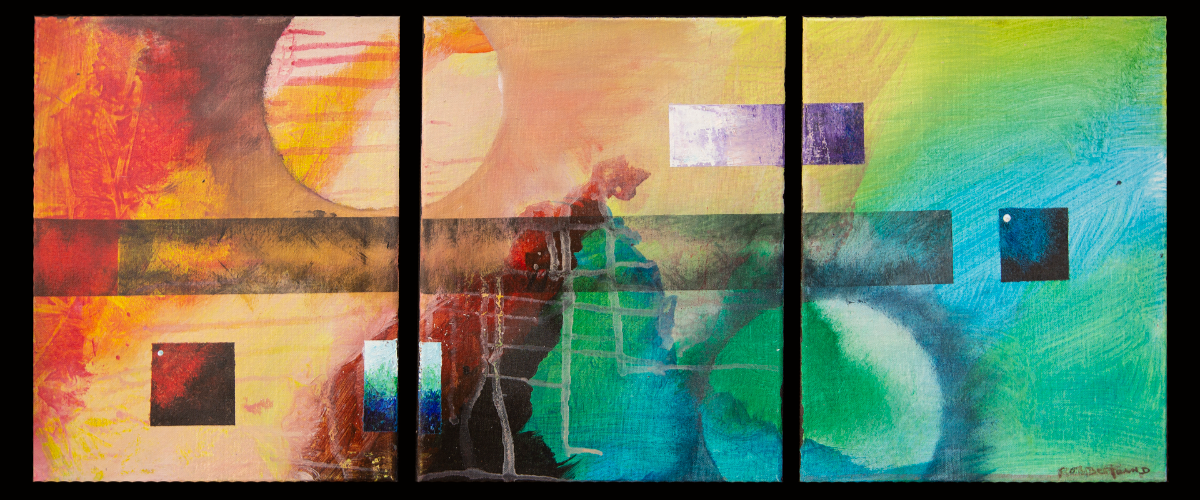
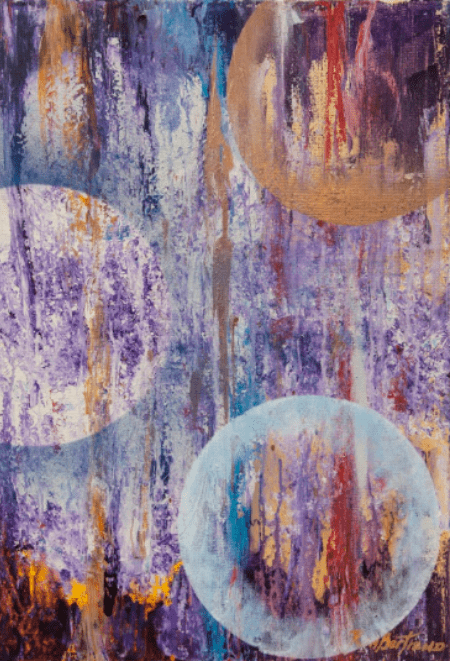
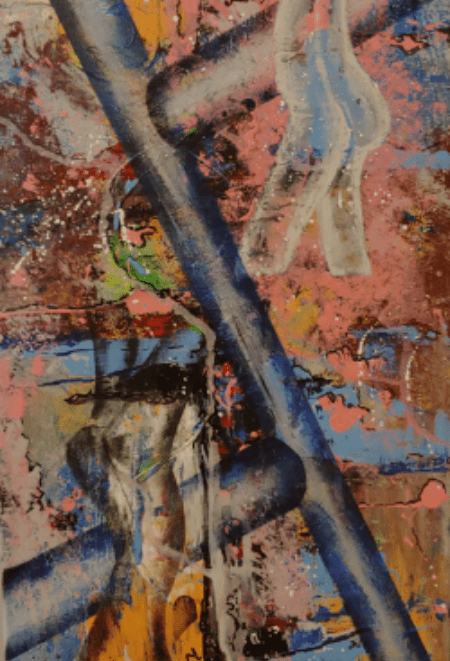
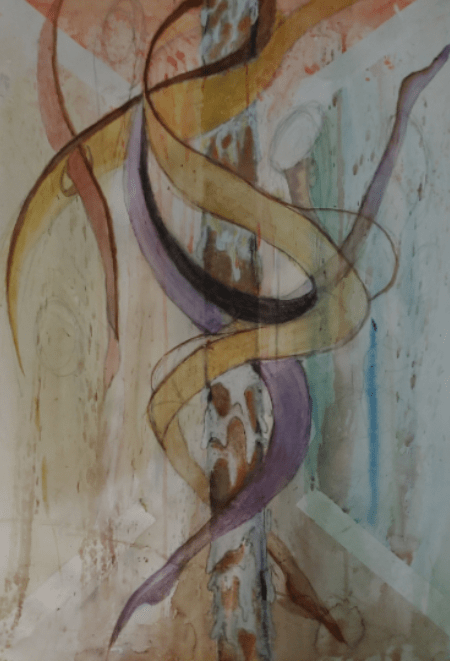
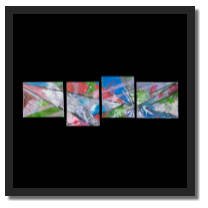
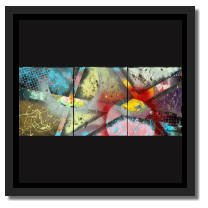
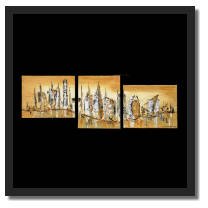
Discover original abstract works that experiment with line, texture, geometry, movement, and the interaction of colors. The collection includes paintings such as Spheres in Ether, Gemium, Enchanted, and DNA, reflecting different explorations of form and composition.
The Pleasure of Experimentation
Abstract painting gives Ronald room to experiment with materials and techniques.
Paint may be layered, spread, interrupted, or reshaped. Geometric elements can sit beside expressive marks. Carefully arranged forms can give way to spontaneous gestures.
The process becomes an opportunity to respond to what is happening on the surface rather than follow a fixed plan. For Ronald, this balance between control and improvisation is an important part of the creative experience.
From the Drawing Board to the Canvas
Ronald’s interest in abstraction is closely connected to his life as an architect. The same curiosity that leads him to investigate architectural space also informs his approach to nonrepresentational painting.
Yet the experience is fundamentally different.
Where architecture must eventually become a functional environment, an abstract painting can remain open to interpretation. It invites each viewer to find their own relationship with its shapes, colors, and visual rhythms.
Interested in an Abstract Painting?
Explore the individual works in the collection and reach out if you would like to learn more about a particular painting.